Why we start with a man born in 1846
Escoffier did not fix
the kitchen of his time.
He invented one.
We follow him in spirit, not in structure. What he recognised in 1890 — that the kitchen needed a fundamental shift, not incremental improvement — is exactly what we recognise today.
The Parallel
1890
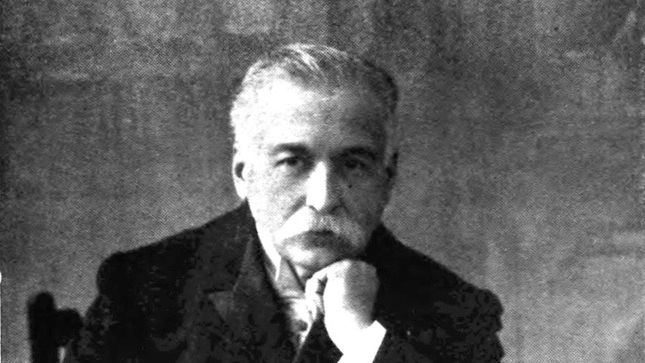
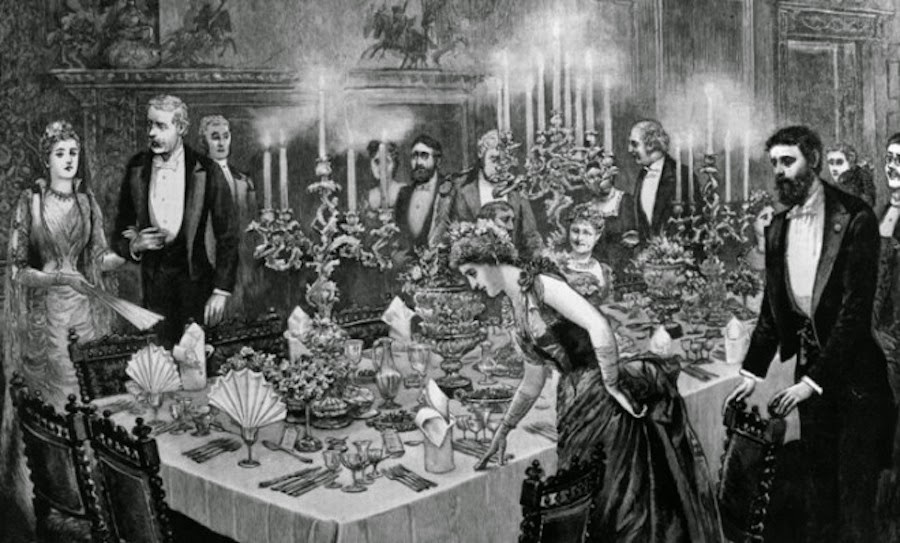
By the time Auguste Escoffier arrived at the Savoy Hotel in London, he was 44 years old. He had spent thirty years in French kitchens — apprenticed in Nice at 13, line cook in Paris at 19, army chef through the Franco-Prussian War, restaurant owner in Cannes, kitchen chief for César Ritz at Monte Carlo.
He had watched the same chaos repeat itself in every kitchen he entered. Cooks working in isolation. Quality swinging wildly from plate to plate. Talent wasted on repetitive drudgery. Scaling a kitchen from 50 guests to 200 was pure chaos.
The Savoy was not where he discovered the problem. It was where he was finally ready to solve it. He created the Brigade de Cuisine — a system that multiplied the impact of skilled chefs by introducing intelligent structure. The food got better. The scale got bigger. The cost per plate went down.
2026
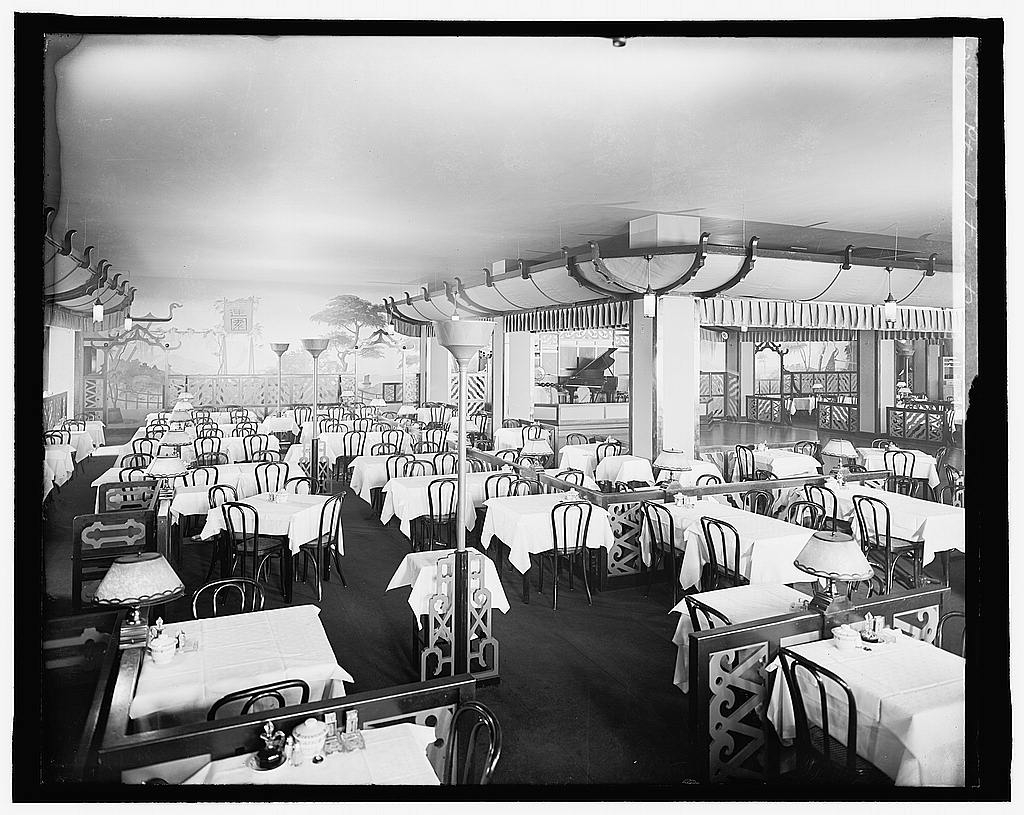
130 years later, Escoffier's invention no longer fits the kitchen of our time. The line cooks who held up the brigade are gone — 70% of operators cannot fill positions. The apprenticeship pipeline is contracting. Immigration policy is tightening.
What remains is a vicious circle. Chefs spend their days not creating food but finding, training, and supervising line cooks — hoping that this time, the output will be consistent. It rarely is. Line cooks leave. Their superiors are fired. The cycle restarts.
If Escoffier were alive today and looked at this situation — at the reheating of convenience food, at the talented chefs earning almost nothing, at an industry haemorrhaging staff — he would not patch the existing system. He would ask: what tools do we have today to do something fundamentally different?
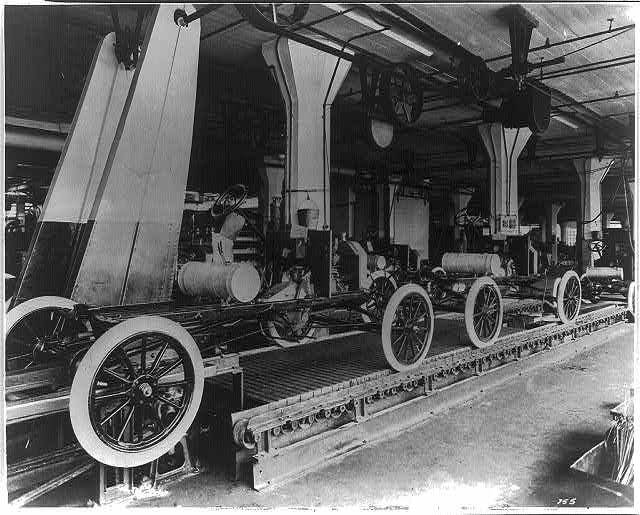
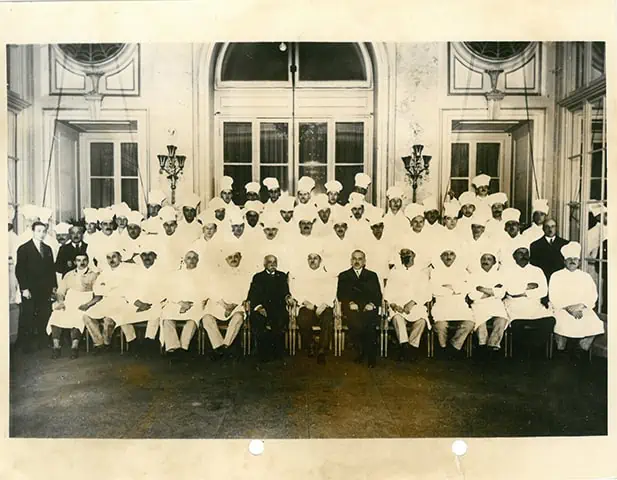
Escoffier observed how industry organised humans between machines for both quality and throughput. He applied the same logic — military precision, clear roles, structured stations — to create the kitchen brigade. It was not a culinary invention. It was an organisational one.
Our Thesis
We are not looking for another machine with swirling robotic arms. We are not building another AI-based software layer on top of broken processes.
We are recreating kitchen workflows from scratch — systematically, completely — so that chefs return to what they were trained for: creating, tasting, and plating.
This is how we compare ourselves to Escoffier. He recognised that his industry needed a fundamental shift, not incremental innovation. A new system, not a better workaround. We recognise the same thing — at a different scale, against a different bottleneck, 130 years later.
The Brigade de Cuisine
A military system applied to the kitchen.
Escoffier borrowed from industry and the military: a clear hierarchy, defined stations, strict roles. The Chef de Cuisine commands. The Sous Chefs coordinate. The Chefs de Partie own their stations. The Commis — the line cooks — execute. This pyramid worked for over a century.
Chef de Cuisine
Executive Chef — commands the kitchen
Sous Chefs
Deputy Chefs — coordinate across stations
Chefs de Partie
Saucier · Rôtisseur · Pâtissier · Poissonnier · Garde Manger · Entremetier
Commis & Apprentis
Line Cooks — the foundation of the entire system
The brigade was never about cuisine. It was about organisation — how to produce consistent quality at scale with human hands.
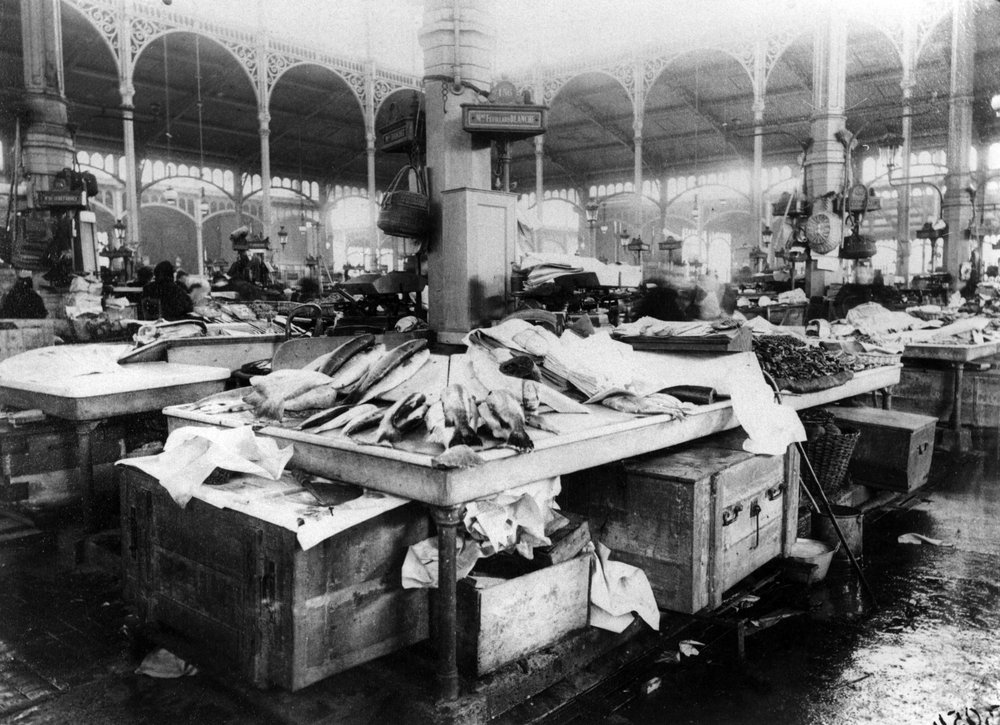
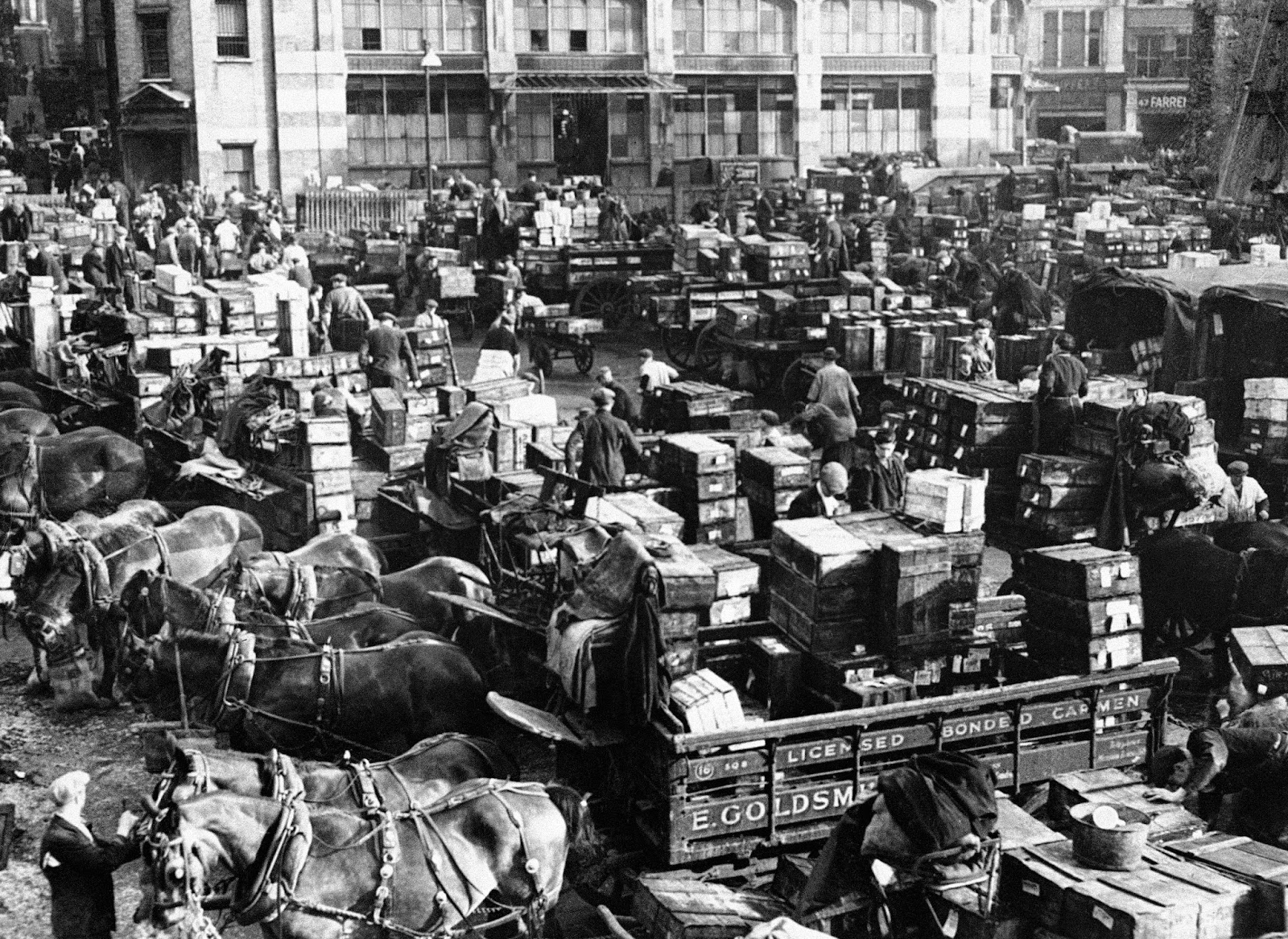
From the markets of Paris and London, raw materials arrived daily at industrial scale. The brigade turned this chaos of fish, meat, and vegetables into consistent, refined dining — through process, not luck.
The Crumbling Foundation
The bottom fell out. And an entire industry
pretended not to notice.
For decades, the foundation of every professional kitchen was the same: Commis and apprentices. Young workers — often migrants, often with little formal education — who did the repetitive, physically demanding work that kept the brigade running. Peeling, chopping, cleaning, prepping. The work nobody saw but everybody depended on.
Over the last ten to fifteen years, that foundation has quietly disappeared. Not overnight. Step by step.
Labour costs rose
As minimum wages climbed, the economics of the bottom layer broke. Restaurants could no longer afford the numbers they needed. Station chiefs absorbed the work — doing the job of three with the pay of one.
Workers found better options
The people who once filled these roles — migrants, workers without formal qualifications — found alternatives. Logistics, retail, delivery services. Jobs with better hours, more free time, better pay, and far more humane treatment from their superiors.
The culture never adapted
Outside of Michelin-starred kitchens, the culture remained stuck. Yelling. Cursing. Treating people as replaceable parts. The egocentric chef who ran the kitchen through fear rather than leadership. After eighty years of this, the industry is paying the price.
The brigade today
Chef de Cuisine
Now hiring, training, supervising — instead of creating
Sous Chefs
Absorbing work from below, burning out
Chefs de Partie
Doing the work of three, with the pay of one
Commis & Apprentis
Gone
What the hospitality industry failed to do — over eighty years — is what virtually every other trade accomplished: establish intelligent leadership systems. Build proper training programmes. Create working conditions that attract and retain talent. And above all: develop intelligent processes, supported by smart machines and software, that reduce dependency on the most vulnerable layer of the workforce.
The result? In 2026, many kitchens still operate in principle like they did in 1890 — except the people Escoffier designed the system for are no longer there.
The Vicious Circle
Chef hires line cooks.
Chef trains line cooks.
Chef supervises line cooks — 365 days a year — hoping for consistency.
Output is inconsistent. Customers notice.
Line cooks leave, or are let go.
Chef starts over.
This circle can only be broken by changing the kitchen process itself — not by finding better people to put into a broken process. For the benefit of customers. For the benefit of chefs. For the financial soundness of the restaurant.
The Starting Point
Not more machines in a broken process.
Intelligent processes where machines work
under the chef's direction.
This is the starting point for Smart Companion. We are not adding another piece of equipment to a kitchen that fundamentally still runs like 1890. We are redesigning kitchen structures from the ground up.
Our approach: intelligent processes where machines execute complex, repetitive tasks — under the programming and direction of a responsible Chef de Cuisine. The chef does not disappear. The chef is elevated. Back to creating, tasting, and plating. Back to what they were trained for.
The Commis are not replaced by robots. The work the Commis used to do is absorbed by intelligent workflows — consistent, tireless, scalable. The chef regains creative control. The restaurant regains financial stability. The guest gets better food.
Escoffier's Journey — 30 Years Before the Savoy
Born in Villeneuve-Loubet, Provence
Apprenticed at his uncle's restaurant in Nice, age 13
Line cook at Le Petit Moulin Rouge, Paris, age 19
Army chef through the Franco-Prussian War
Opens Le Faisan d'Or, his own restaurant in Cannes
Kitchen chief for César Ritz at the Grand Hotel, Monte Carlo
Opens the Savoy with Ritz in London — implements the Brigade de Cuisine
Opens the Ritz London and Carlton Hotel — the brigade becomes the global standard
The Savoy was not the awakening. It was the culmination. Thirty years of mastery finally meeting the stage to implement the solution.
"You owe me nothing of what I built.
You owe me only what I did."
— The idea we attribute to Escoffier's legacy
For those who want to go deeper into the original story:
ARTE — Auguste Escoffier ou la naissance de la gastronomie moderneCreate · Taste · Plate
Historical photographs: Public domain archives — Library of Congress, Wikimedia Commons, Disciples Escoffier. Documentary reference: ARTE France.